
Financial Model for Higher Education to Inform Hiring Budget
Optimizing University Hiring Budgets Through Financial Modeling
In the evolving landscape of higher education, a robust financial model for higher education to inform hiring budget is essential for institutions aiming to balance fiscal responsibility with workforce needs. For Higher Education Institutions, especially public universities, this financial model for higher education to inform hiring budget serves as a strategic tool to allocate resources effectively, ensuring that hiring decisions align with enrollment trends, funding sources, and long-term goals. By integrating performance metrics and revenue streams, such models help university presidents and finance leaders navigate economic uncertainties, including those exacerbated by the COVID-19 pandemic, to maintain financial sustainability.
Understanding Budget Models in Higher Education
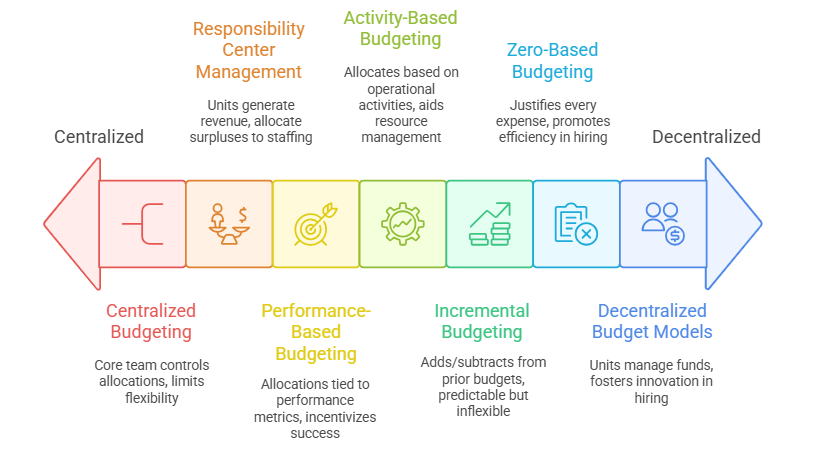
A financial model for higher education to inform hiring budget typically encompasses various frameworks that dictate how revenues from tuition, state appropriations, grants, and auxiliary services are distributed across departments. These models directly influence hiring by linking personnel costs to performance metrics, revenue streams, and institutional priorities. Common approaches within a financial model for higher education to inform hiring budget include:
Centralized Budgeting
In centralized budget models, a core administrative team, often involving the Office of Budget and Financial Analysis, controls allocations. This aspect of the financial model for higher education to inform hiring budget ensures alignment with overarching Strategic Planning but can limit unit-level flexibility in hiring. For instance, during the COVID-19 pandemic, many institutions relied on centralized systems to impose recurring reductions, freezing hires to maintain financial stability.
Decentralized Budget Models
Contrasting centralized approaches, decentralized budget models empower individual colleges or departments to manage their funds. This fosters innovation in hiring, allowing units to recruit based on specific needs, such as expanding Distance Education programs.
Responsibility Center Management (RCM)
A hybrid decentralized model, RCM treats academic units as “responsibility centers” that generate and retain revenues while bearing costs. At Rutgers University, RCM has enabled targeted hiring in high-demand areas like mental health fields, as units can allocate surpluses directly to staffing.
Performance-Based Budgeting
Under Performance-Based Funding Models, allocations are tied to metrics like graduation rates, enrollment data, and research output. States like Oklahoma, through the Oklahoma State Regents for Higher Education, use this to incentivize hires that boost student success, such as advisors for career and college planning.
Zero-Based Budgeting and Activity-Based Budgeting
Zero-Based Budgeting requires justifying every expense from scratch, promoting efficiency in hiring by eliminating redundant roles. Activity-Based Budgeting allocates based on operational activities, aiding in resource management for workforce planning.
Incremental Budgeting
This traditional method adds or subtracts from prior budgets, often leading to predictable but inflexible hiring patterns.
These models have evolved, especially post-COVID-19 pandemic, with a shift toward hybrid systems that incorporate collaborative scenario planning to address financial burdens.
| Budget Model | Key Features | Impact on Hiring Budgets |
| Centralized Budgeting | Top-down control by administration | Uniform hiring policies, less unit autonomy |
| Decentralized Budget Models | Unit-level revenue retention | Flexible recruitment for specialized roles |
| Responsibility Center Management | Revenue minus costs model | Incentivizes revenue-generating hires |
| Performance-Based Budgeting | Tied to metrics like graduation rates | Rewards hires that improve outcomes |
| Zero-Based Budgeting | Justification from zero each cycle | Eliminates inefficiencies in staffing |
| Activity-Based Budgeting | Based on activities and costs | Aligns hires with operational needs |
How Financial Models Inform Hiring Budgets
A financial model for higher education to inform hiring budget provides a structured approach to budgeting that directly influences hiring strategies. In public universities, where government support via entities like the General Assembly or State Legislature plays a key role, this financial model for higher education to inform hiring budget ensures hires align with financial drivers and performance metrics.
For example, in Performance Funding Initiatives, institutions like those under the Illinois Board of Higher Education receive funding based on outcomes, prompting hires in areas that enhance enrollment data or graduation guidance. Texas State University has leveraged such models to prioritize faculty in high-demand skills, using budget recommendations to forecast hiring needs.
Revenue streams, tuition, fees & subsidies, state-funded programs, and funding opportunities feed into these models. At Oakland University, a decentralized approach allows units to use surpluses for strategic hires, reducing reliance on central funds. Conversely, centralized models, as seen in New York State institutions, facilitate equitable distribution but may delay hires during budgetary changes.
The COVID-19 pandemic accelerated adaptations, with many shifting to Performance-Based Funding Comparisons to justify hires amid declining enrollments. Tools like Power BI and Data Pipelines enable data integrity certification, providing real-time insights for informed hiring decisions.
Benefits for Financial Sustainability and Strategic Planning
Adopting a comprehensive financial model for higher education to inform hiring budget enhances financial sustainability by optimizing resource management. University presidents benefit from transparent fund source groupings, enabling proactive hiring to address skill gaps. For instance, the Missouri Workforce Development Board integrates models that support Missouri Registered Apprenticeships, informing hires in workforce-aligned fields.
Strategic Planning is bolstered, as models like RCM promote accountability. At the Coordinating Board for Higher Education levels, this leads to better alignment with state goals, such as Oklahoma’s Promise or Fast Track Workforce Incentive Grant programs, which tie funding to hires that improve university access rates. Overall, these models reduce manual effort in budget development, allowing focus on student initiatives like financial literacy and NYS P-TECH Programs.
Real-World Examples and Applications
- Rutgers University: Using RCM, Rutgers allocates budgets to centers, enabling hires in research-heavy units while maintaining fiscal affairs division oversight.
- Texas State University: Performance metrics guide hiring, with budget model redesigns post-COVID ensuring hires support student success plans.
- Oklahoma State System of Higher Education: The State Regents oversee models that incorporate OneNet fee structures and Oklahoma Higher Education Code, informing hires through enrollment data analysis.
- Illinois Institutions: Bodies like the Illinois Community College Board and Illinois Student Assistance Commission use performance-based models to fund hires in mental health and academic program approval.
In Missouri, the Adult Learner Network and Healing Arts Center hires are informed by models emphasizing skills in high demand.
Challenges and Considerations
Despite advantages, challenges persist. Decentralized models can lead to inequities, while performance-based systems may pressure institutions to prioritize short-term metrics over long-term hires. The financial burden of the COVID-19 pandemic highlighted vulnerabilities, with some facing recurring reductions.
Regulatory compliance, such as Section 8 of the Board of Higher Education Act or institutional accreditation, adds complexity. Skill gaps among unit leaders necessitate training events, and data integrity issues require robust systems. Additionally, cybersecurity and ethical concerns in handling financial data also demand attention.
Future Trends in Higher Education Budgeting
Looking ahead, hybrid models blending centralized and decentralized elements will dominate, incorporating AI for collaborative scenario planning. Integration with blockchain for transparent funding allocation and quantum-inspired analytics could enhance precision.
Expect greater emphasis on equity in Performance Funding Initiatives, democratizing hires for underrepresented fields. As the Oklahoma Free Speech Committee and Veterans Day initiatives show, models will increasingly factor in societal impacts.
Frequently Asked Questions
What is a budget model in higher education?
A budget model outlines how Higher Education Institutions allocate resources, including for hiring, based on revenue streams and performance metrics to ensure financial sustainability.
How does Performance-Based Budgeting affect faculty hiring?
It ties funding to outcomes like graduation rates, encouraging hires that boost metrics, as seen in public universities under entities like the Oklahoma State Regents for Higher Education.
What role does Responsibility Center Management play in hiring?
RCM decentralizes control, allowing units to use revenues for targeted hires, promoting accountability and strategic planning.
How has the COVID-19 pandemic influenced budget models?
It prompted shifts toward resilient models with recurring reductions and collaborative scenario planning to manage financial burdens.
Are these models suitable for public universities?
Yes, especially with government support from the General Assembly or State Legislature, aiding in equitable hiring and resource management.
What challenges arise in implementing these models?
Issues include inequities, data integrity, and adapting to budgetary changes, requiring oversight from boards like the Illinois Board of Higher Education.
Conclusion
A financial model for higher education to inform hiring budget is essential for navigating fiscal challenges while informing hiring budgets that drive institutional success. From centralized budget models ensuring stability to Performance-Based Budgeting rewarding outcomes, these frameworks empower public universities to achieve financial sustainability and align hires with Strategic Planning. As the sector evolves beyond the COVID-19 pandemic, embracing innovative approaches will be key. Institutions like Texas State University and Rutgers University exemplify how tailored models can optimize workforce planning for a brighter future in higher education.
Oak Business Consultant has extensive experience in financial modeling for the education sector and can help design models that align hiring strategies with institutional goals. Contact us today to learn how we can support your institution’s workforce planning and financial decision-making.